The Nakshi Kantha is more than just a quilt; in the spirit of Jashimuddin’s poetry, it is the untold story of a woman’s heart, woven thread by thread into the fabric of village life.
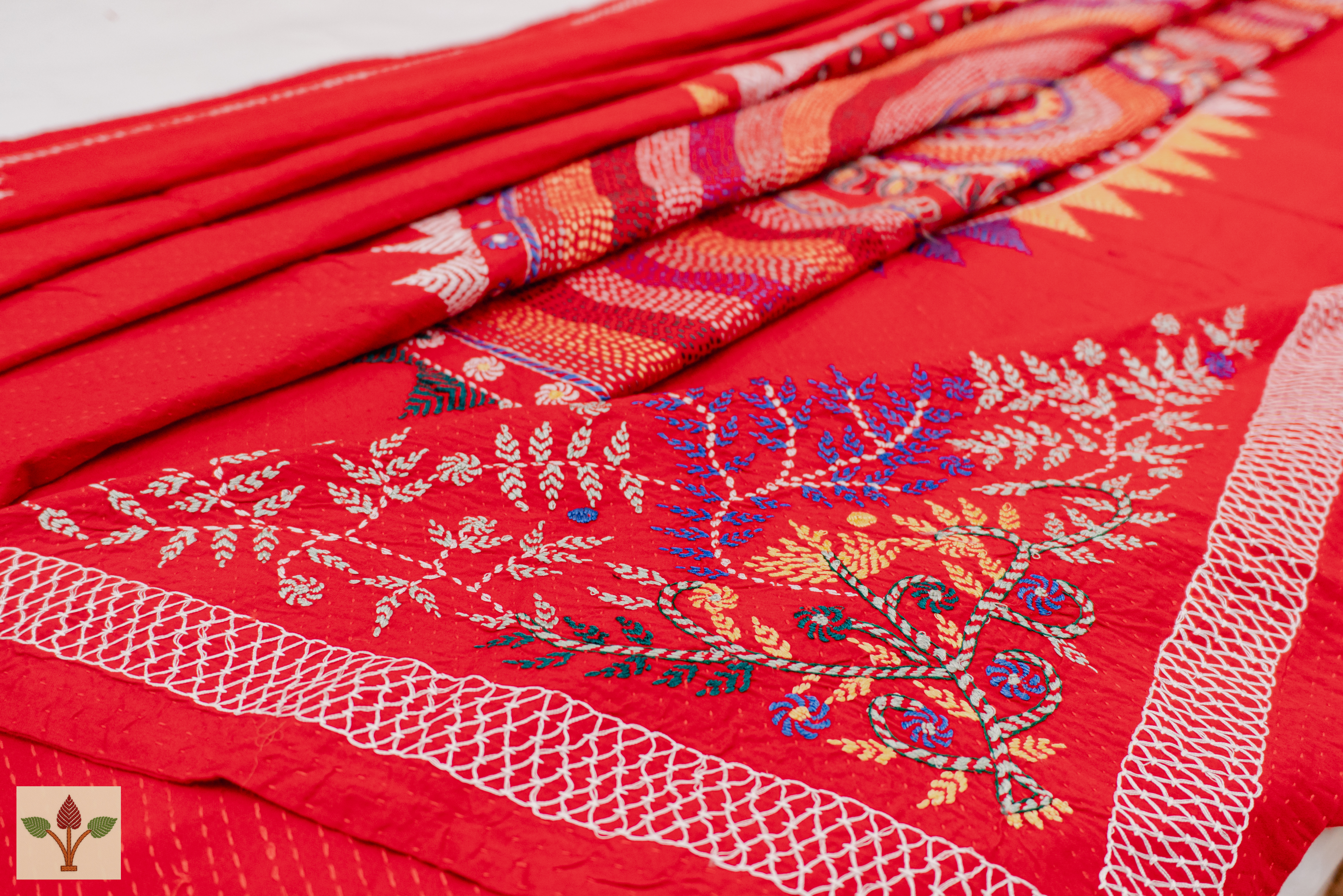
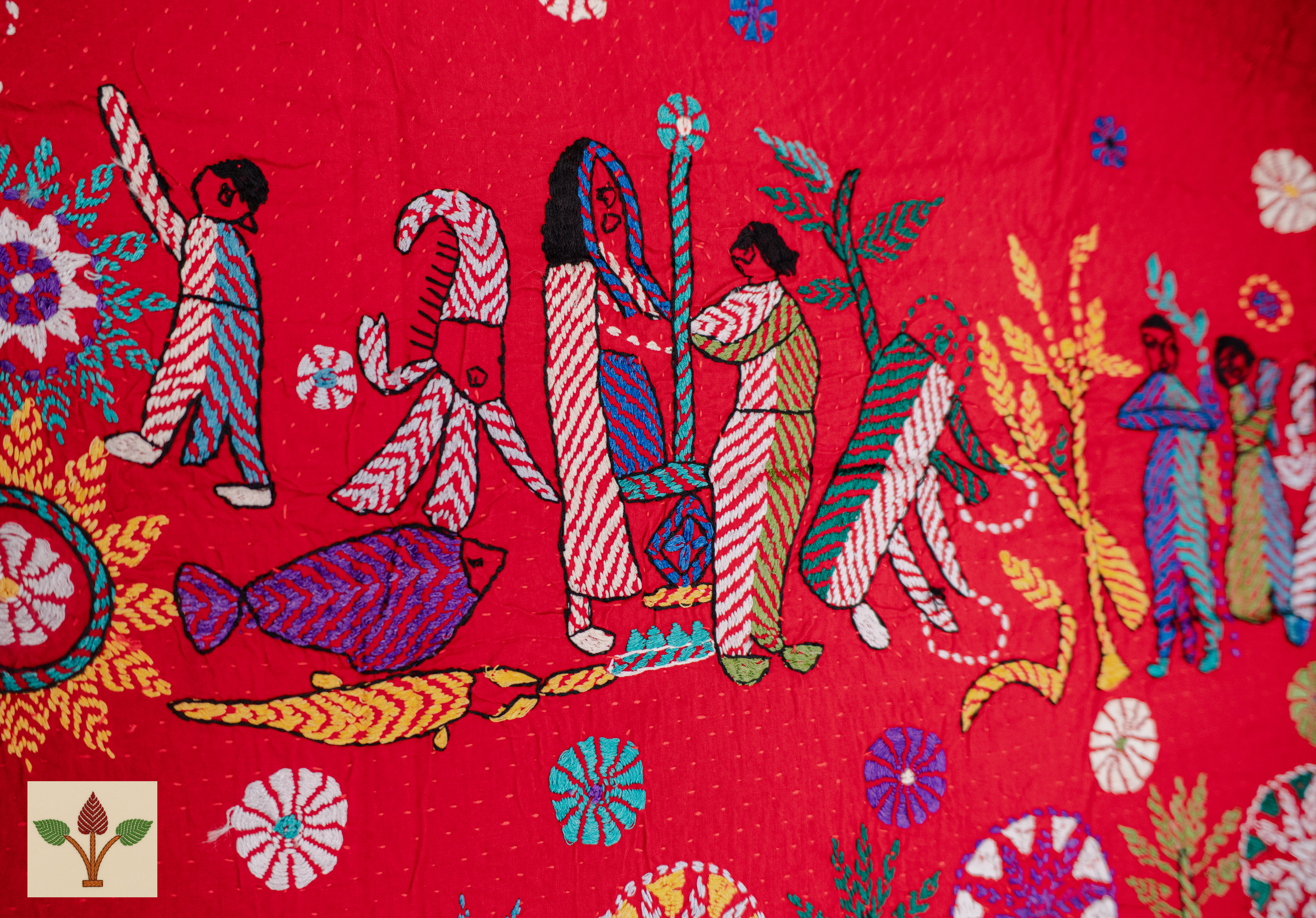
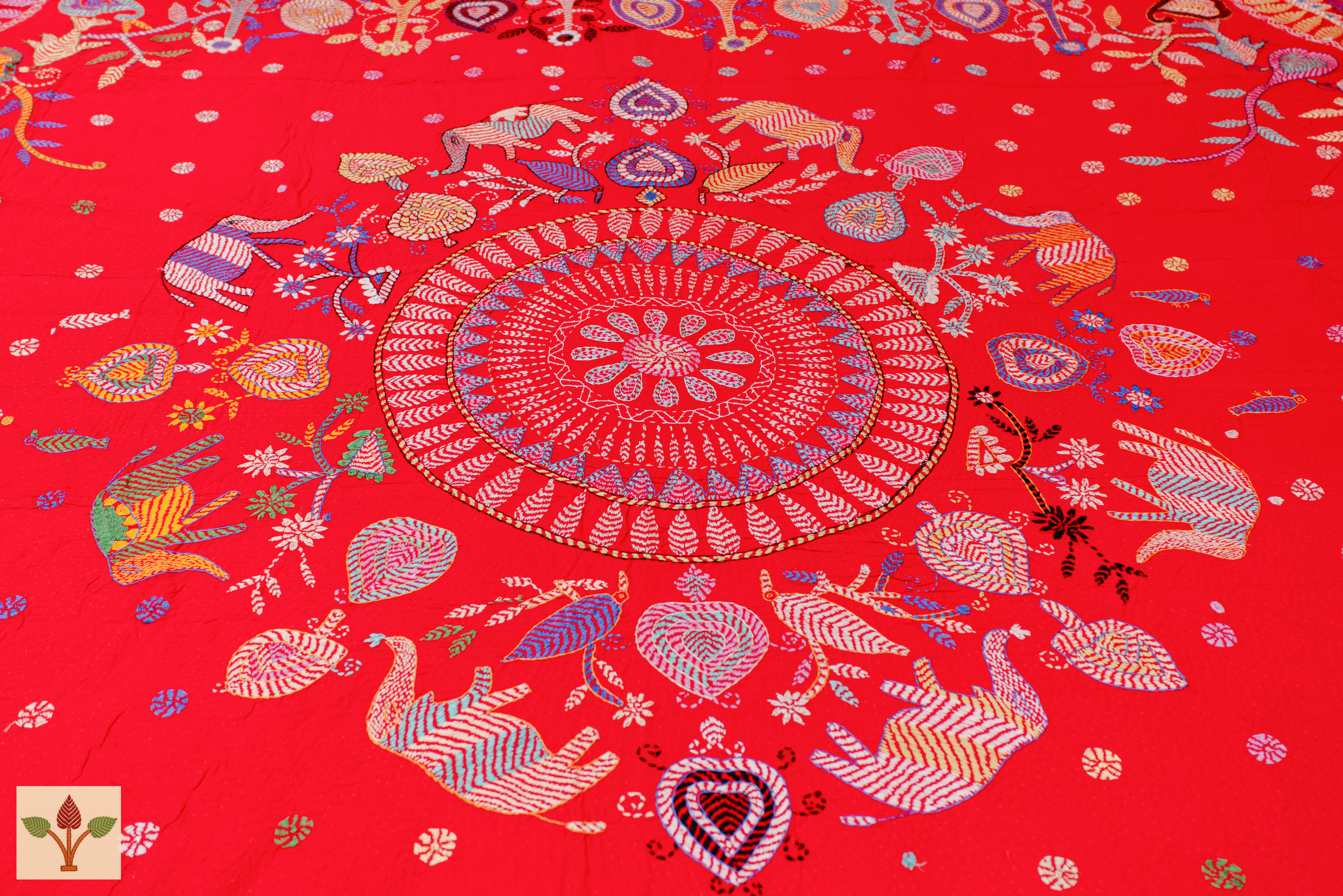
Laal Mela
BDT 11,250


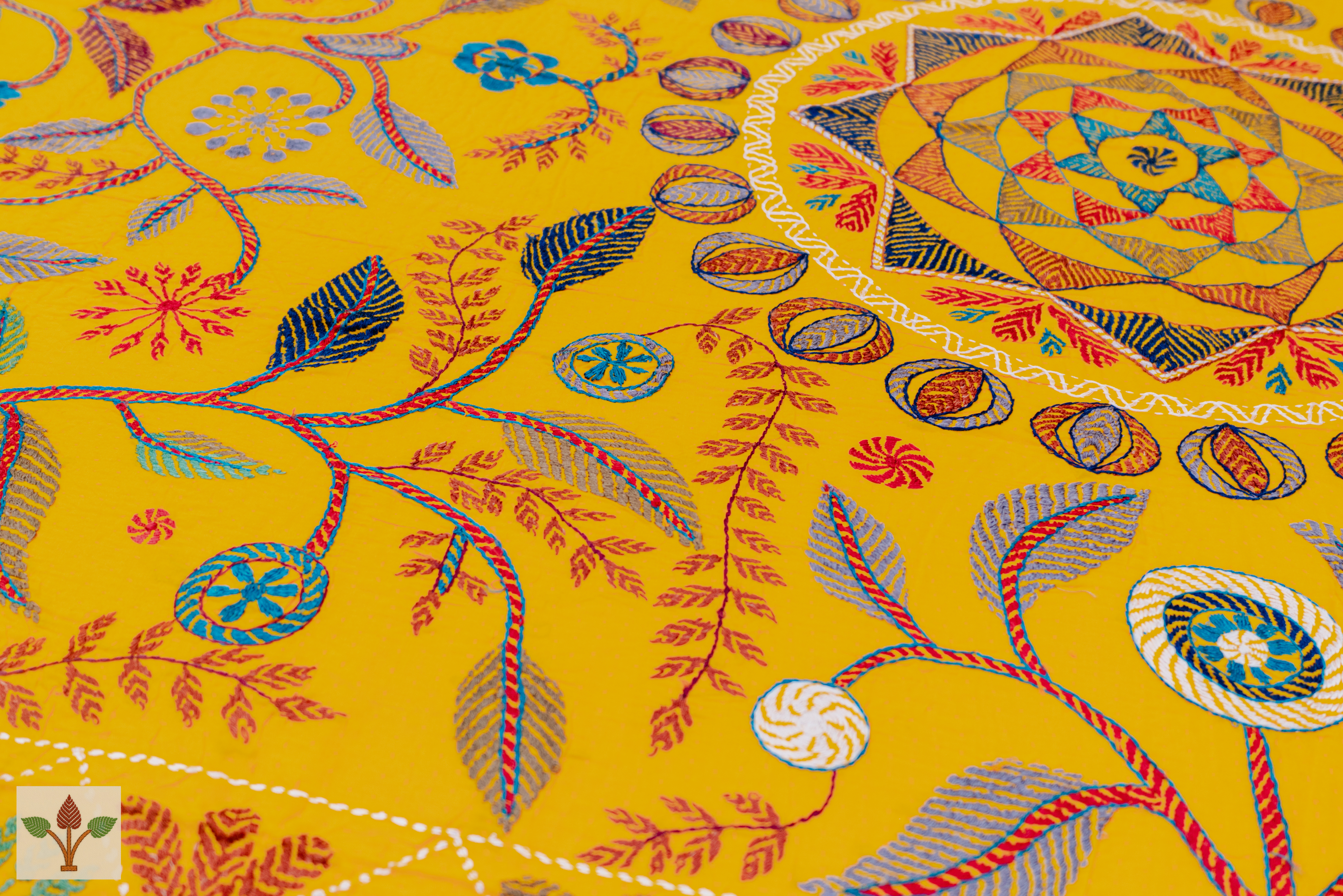
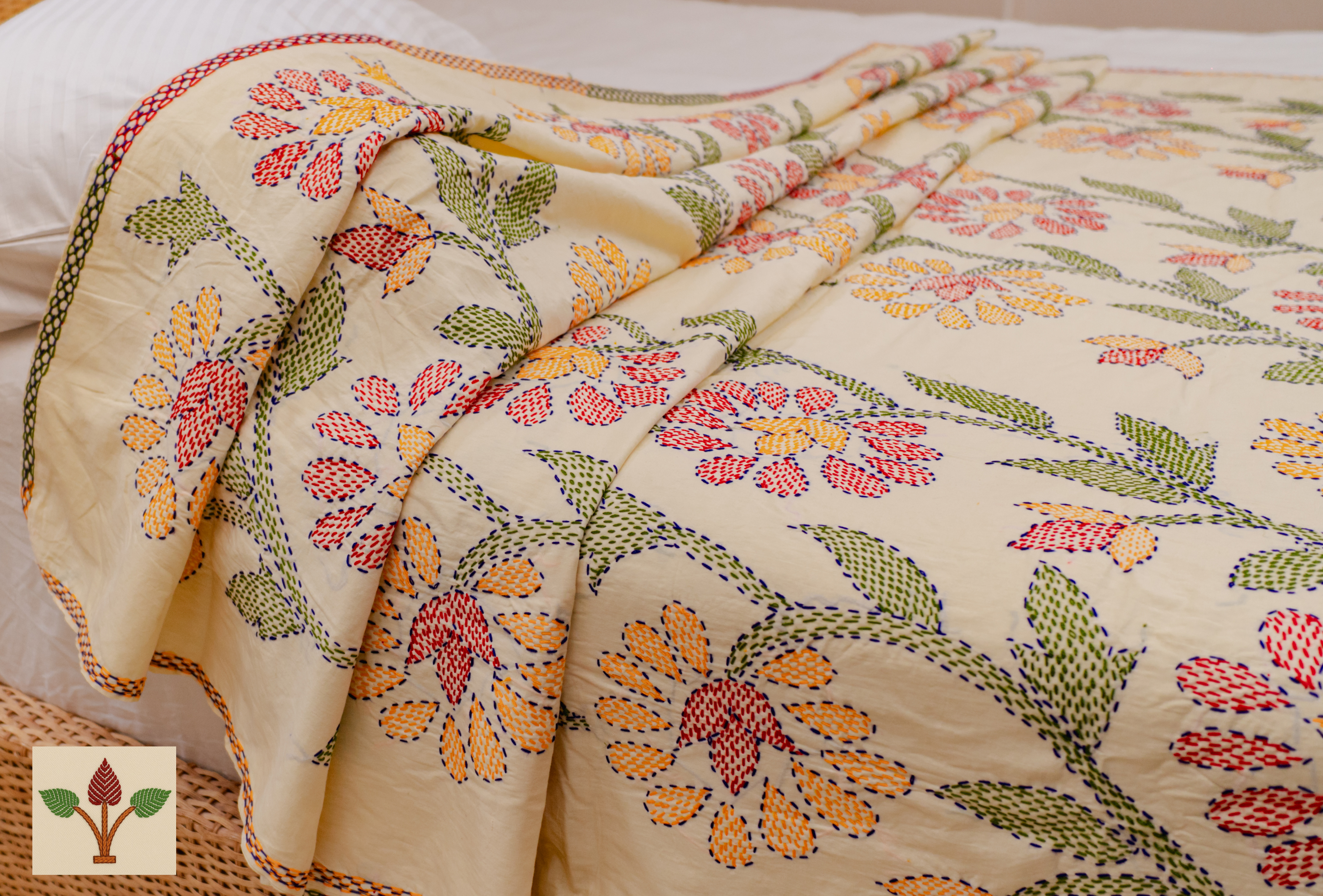
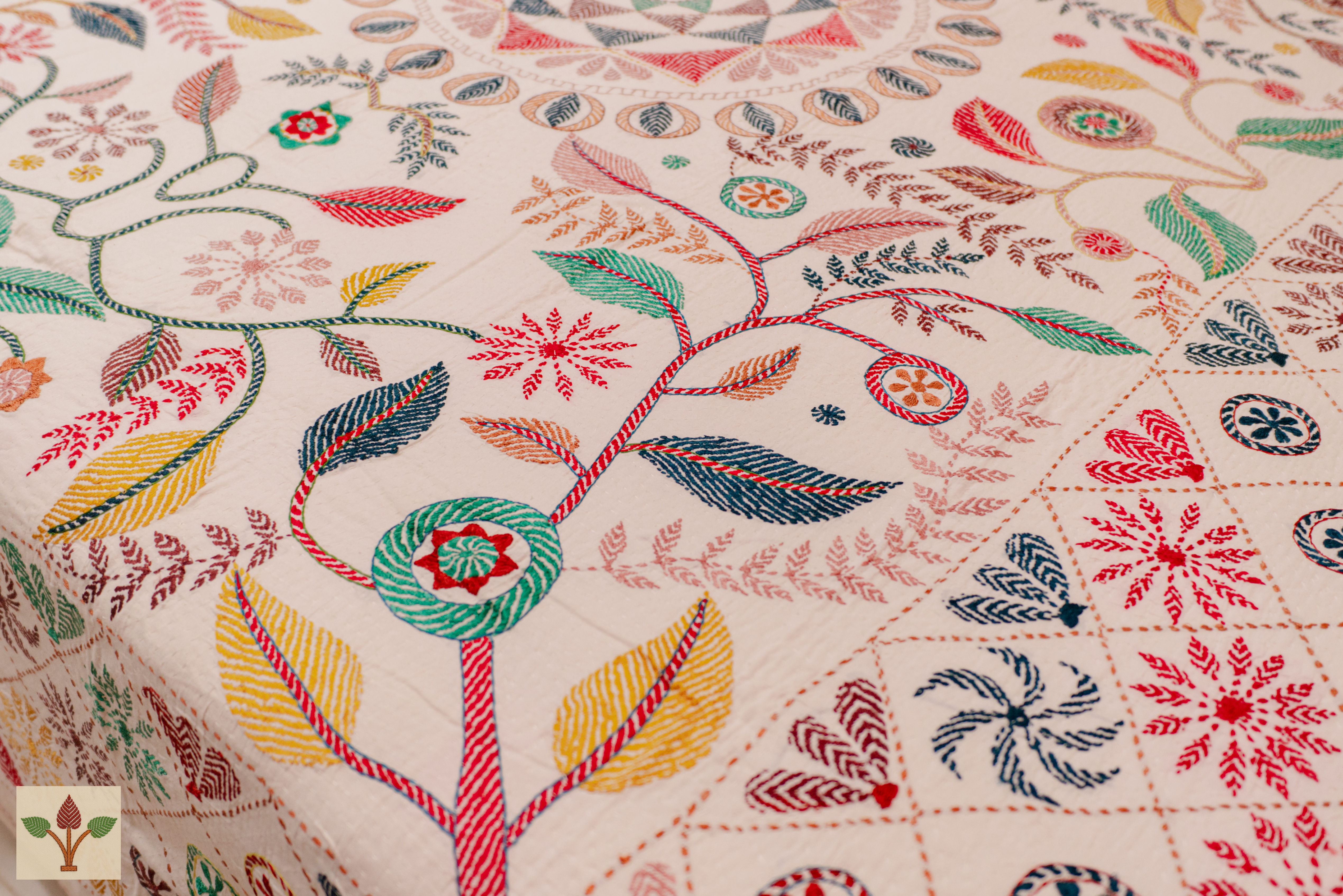

Amber Glow
BDT 10,000 – Backorder
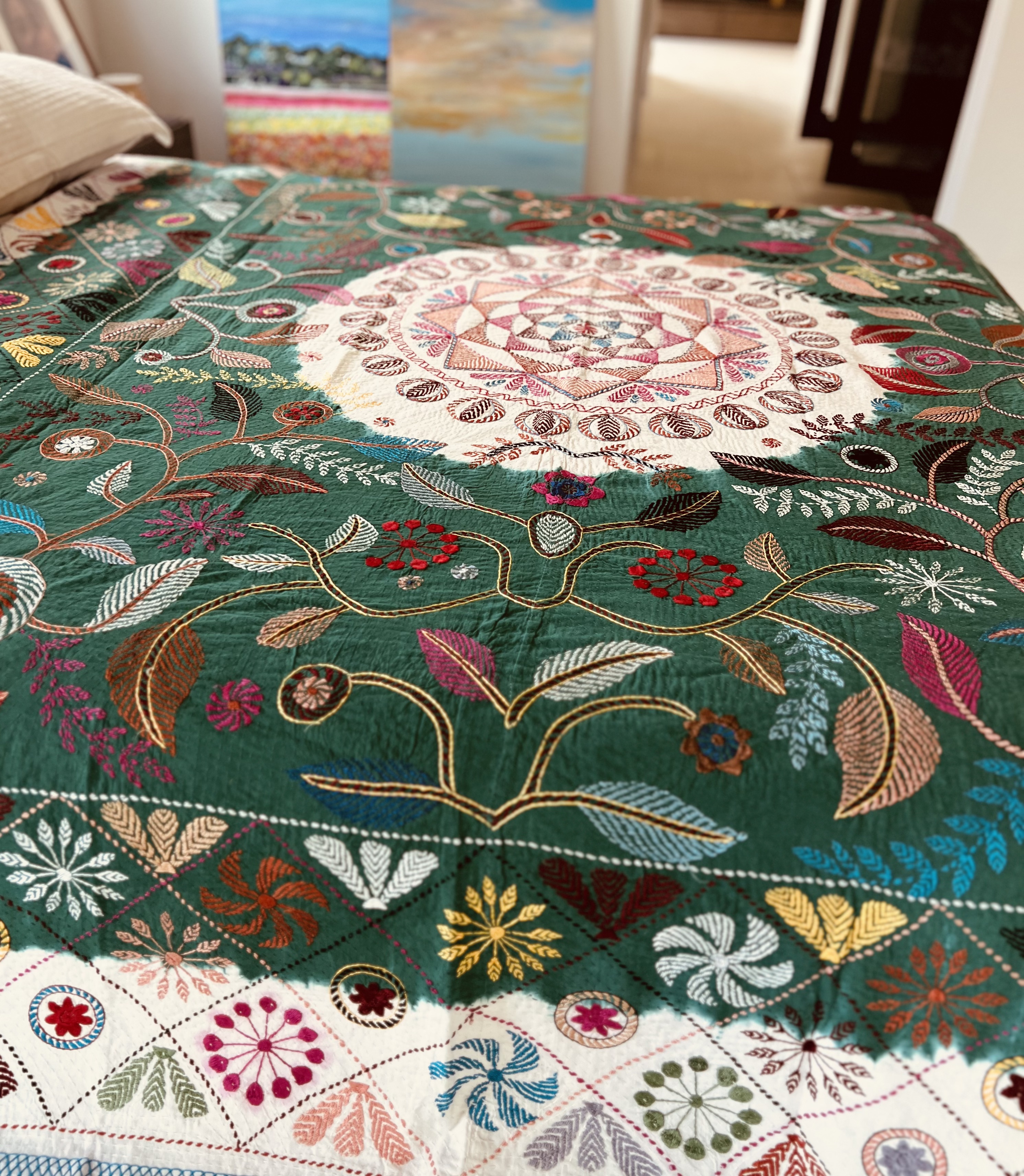
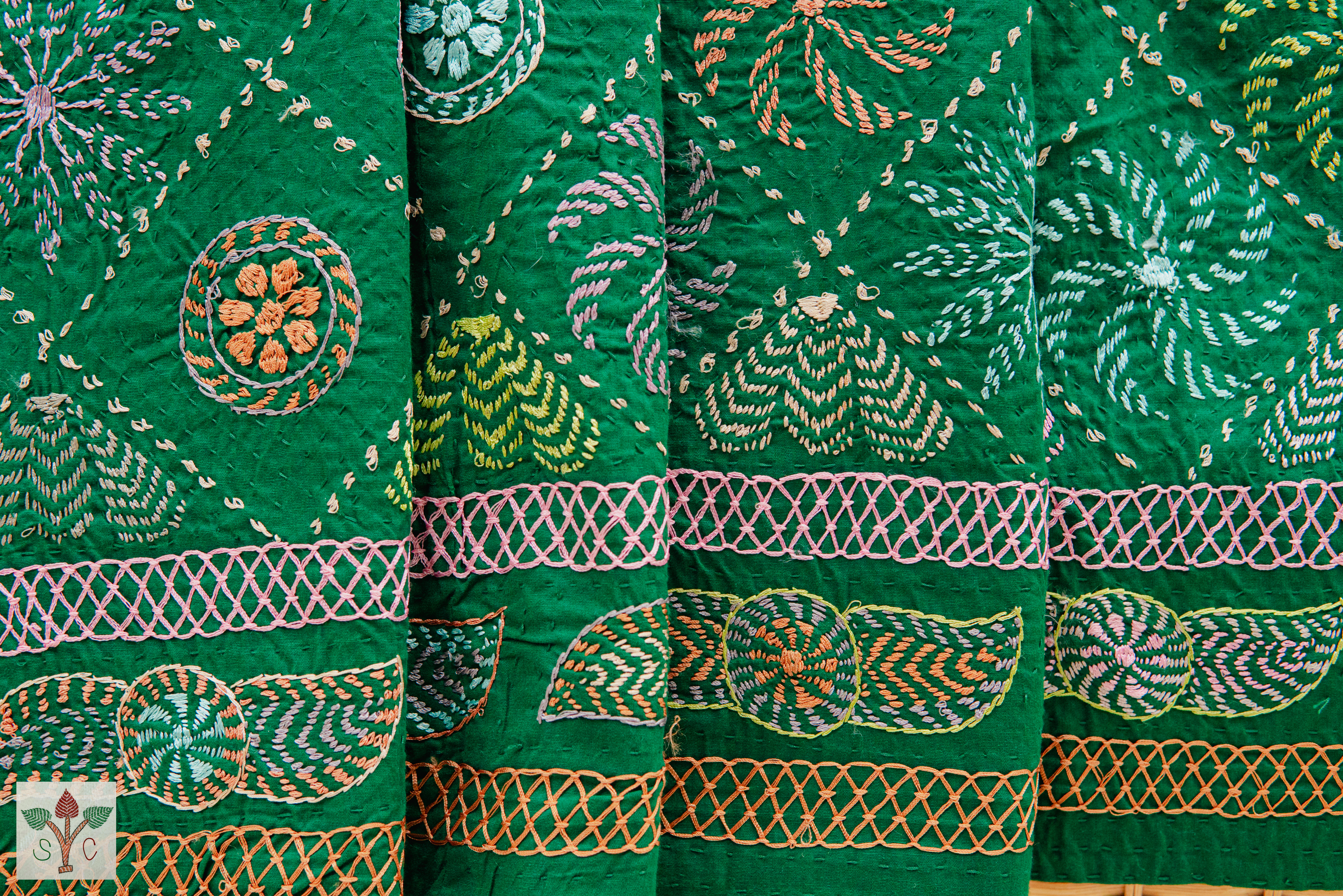
Emerald Garden
BDT 10,000 – Backorder
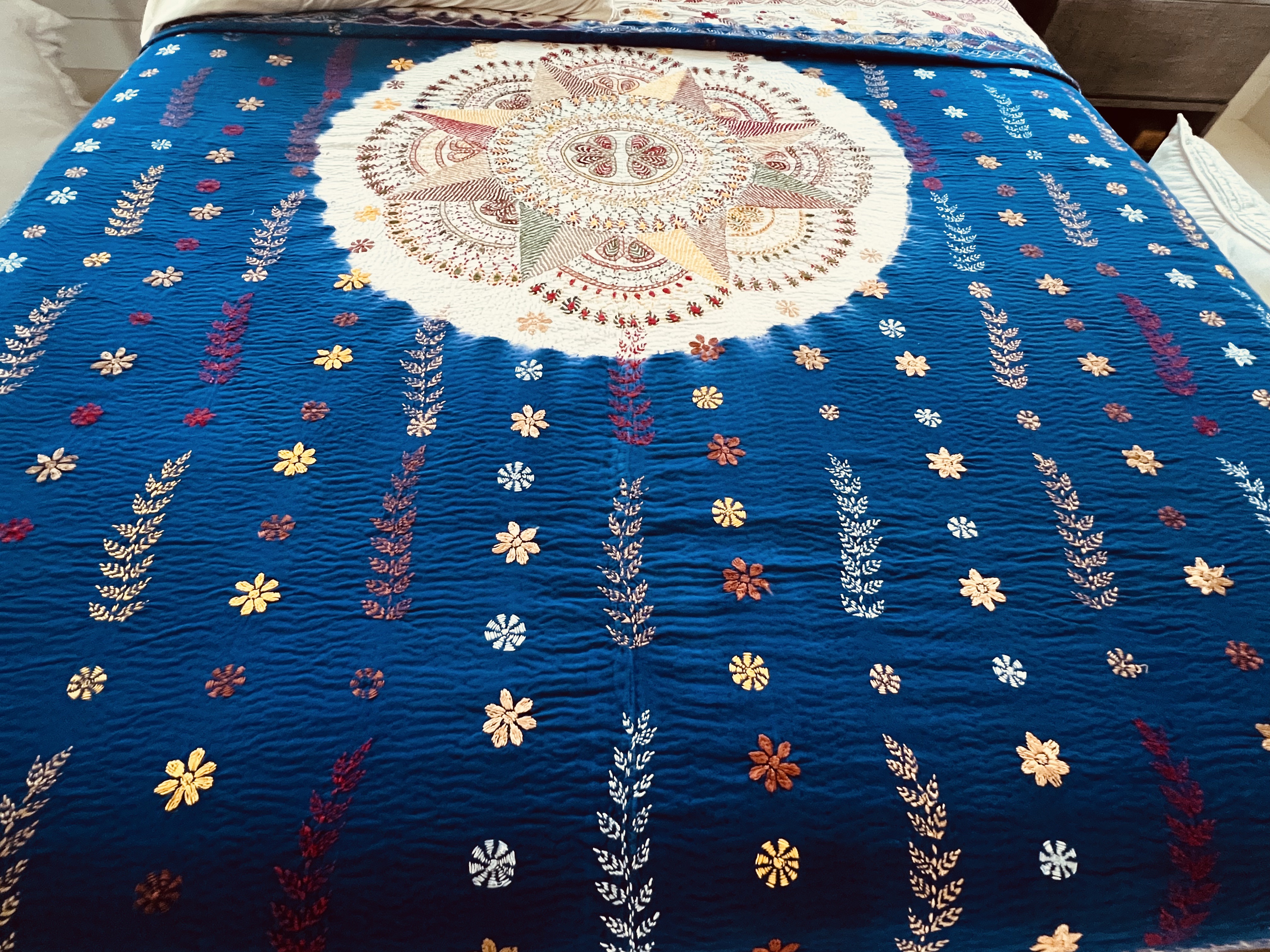
Nil Akashi
BDT 10,000 – SOLD OUT

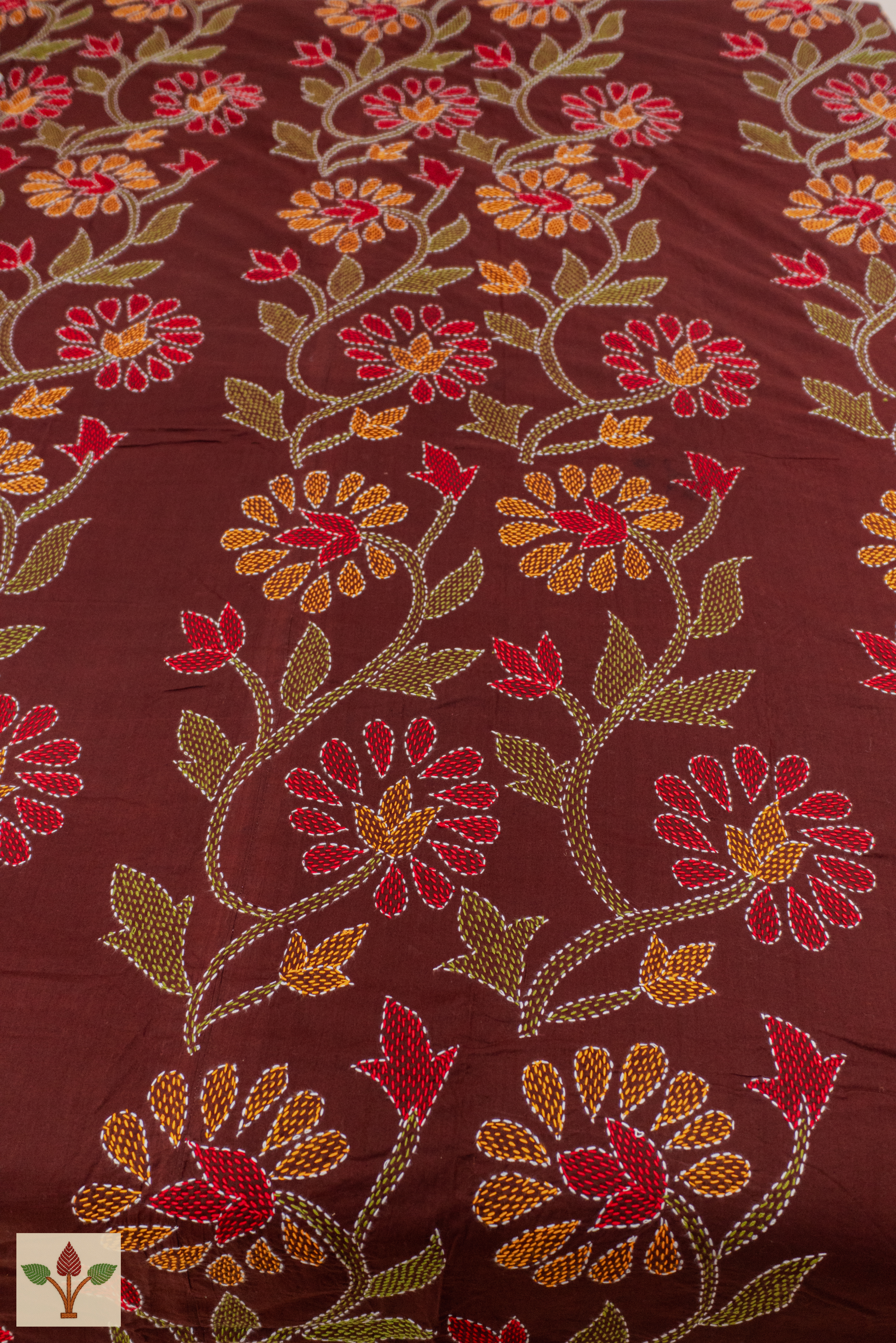
Ranga Kotha
BDT 12,000 – SOLD OUT

Sahera
BDT 11,000 – SOLD OUT

Dhabal Bihan
BDT 11,500 – SOLD OUT
The Quilt of Untold Stories
In the words of the poet Jashimuddin, the Nakshi Kantha is born not in grand halls, but in the simple homes of rural Bengal, where the quiet rhythm of the day is measured by the needle. It is an art born of necessity and elevated by sorrow, hope, and deep, abiding love.
It is stitched, not from new cloth, but from the tender memory of old saris, stacked and softened by time and wear—a patchwork of a family’s history. Every colour is pulled from the earth and the sky: the red of a bride’s wedding bangles, the yellow of turmeric and sun-drenched fields, the blue of the deep monsoon sky, and the green of the paddy fields.
The woman who stitches the Kantha is an artist who needs no formal school. Her canvas is the old cloth, and her inspiration is the very world around her:
- She stitches the river’s winding path and the small fishing boats that sail upon it.
- She captures the village woman fetching water, the farmer plowing the land, and the children playing under the banyan tree.
- She embroiders the sun, the moon, and the lotus, not as mere designs, but as symbols of life, beauty, and eternal hope.
Each Kantha holds the silent, secret language of the stitcher. It is a tapestry of unexpressed emotion. A wife may stitch a beautiful motif of a star for her husband who is far away, or a mother may sew a garden of flowers onto a Kantha for her unborn child. The needle is her pen, and the thread is her soul’s ink.
The Nakshi Kantha, therefore, is the most precious of gifts, passed down from mother to daughter. It is a warm embrace in the cold winter night, a keeper of memories, and the simple, profound poetry of the common Bengali home. It is, quite simply, the silent witness to the joys and sorrows of the common folk.